


[ULTIMATE GUIDE] Cabin Luggage Sizes
![[ULTIMATE GUIDE] Cabin Luggage Sizes](https://velartrip.com/wp-content/uploads/2022/02/Mr-DUPOND-2.jpg)
Getting past the airport agent, gate agent, and flight attendant can feel like an obstacle course.
Will your bag fit? Will you have to check it, pay for it, and hope it shows up at baggage claim?
We've all been there. That's why you should only bring carry-on baggage and never check it.
The first step to traveling light is about learning the rulesThe second step is choosing the right luggage.
Carry-on baggage size and weight vary by airline, the type of fare and the region.
In this article, you'll learn the rules: what qualifies as carry-on baggage, the size and weight limits per airline, and what type of bag to bring. the rules are not uniform, you will also learn what the minimum and most common sizes are by region and worldwide. This way you can be sure that your bag is ready to travel the world.
What is considered carry-on baggage?

Carry-on luggage is the first bag you bring on board an airplane and stow in the overhead compartment. Carry-on luggage can also be called cabin baggage or hand luggage, especially in Europe. Most people carry a suitcase, backpack, or gym bag as carry-on luggage.
You can have one piece of carry-on baggage in addition to the checked baggage you give to the airline and which is transported in the aircraft's hold. Checked baggage is more expensive and more complicated to manage. At VelarTrip, we believe in traveling light, which means you should only bring carry-on baggage.
We will not discuss checked baggage in this article. Instead, we will assume that your carry-on bag is your main bag.
Finally, a personal item is your secondary bag that you bring on the plane but stow under the seat in front of you. This could be a purse, a laptop bag, a tote, or anything else that can fit comfortably in the cubic space under the seat. Personal items are bags, not suitcases. The rules for the size of personal items are even more confusing than those for carry-on baggage.
Most airlines allow you to bring one carry-on bag and one personal item on the plane.
However, basic economy tickets are more restrictive. When traveling on a basic economy fare, you are not allowed to bring carry-on baggage. You can only bring one personal item that can fit under the seat in front of you. Some budget airlines are just as restrictive. In both cases, you can either pay to add carry-on baggage to your fare or pay extra for another type of ticket that includes free carry-on baggage. Be sure to pay attention to the baggage information when booking a flight so you don't overpack and end up having to pay for it upon arrival at the airport.
What are the carry-on baggage sizes per airline?
The most common size for carry-on luggage in the United States is 55 x 35 x 22 or 114 centimeters (length + width + height). The 55 cm height limit includes the wheels and handles of the suitcases.
Most airlines' size limits are similar to these dimensions.
Some airlines only specify total linear dimensions, not individual dimensions. Some airlines allow larger bags. Some airlines are more restrictive.
Use the tables below to get started, but Always check size guidelines on your airline's website before flying.
If you're traveling on multiple airlines, use the strictest size guideline. If you're traveling on a budget airline, expect them to enforce size and weight restrictions more strictly.
If you're considering buying a new carry-on bag, check which airlines you fly with most frequently and buy a bag that fits each one.
Below are tables of carry-on baggage weight and size limits by region and airline. Each airline's name is linked to its website so you can get all the details and latest information directly from your airline. We've also included the minimums, maximums, and (most common) modes for each region and airline. Use these summary statistics to find a carry-on that fits common measurements and which is not too large in any one dimension.
Any discrepancies between measurements are due to conversion between the metric and imperial systems and rounding up or down to make the sizes as clear as possible. In some cases, airlines provide information in both measurement systems.
US Carry-On Luggage Sizes
| Airlines | Carry-on baggage size (cm) | Weight on board (kg) |
| Aeromexico | 55 x 40 x 25 cm | 10 kg¹ |
| Air Canada | 55 x 40 x 23 cm | Not specified |
| Alaska Airlines | 56 x 36 x 23 cm | Not specified |
| Allegiant Airlines | 56 x 36 x 23 cm | Not specified |
| Avianca Airlines | 55 x 35 x 25 cm | 10 kg |
| American Airlines | 56 x 36 x 23 cm | Not specified |
| Delta Air Lines | 56 x 36 x 23 cm | 7 or 10 kg² |
| Frontier Airlines | 61 x 41 x 25 cm | 16 kg |
| Hawaiian Airlines | 56 x 36 x 23 cm | 11 kg |
| JetBlue Airlines | 56 x 36 x 23 cm | Not specified |
| Southwest Airlines | 61 x 41 x 25 cm | Not specified |
| Spirit Airlines | 56 x 46 x 25 cm | Not specified |
| Sun Country Airlines | 61 x 41 x 28 cm | 16 kg |
| United Airlines | 56 x 36 x 23 cm | Not specified |
| WestJet | 53 x 38 x 23 cm | Not specified |
| Minimum | 53 x 36 x 23 cm | 10 kg |
| Maximum | 61 x 46 x 28 cm | 16 kg |
| Average (most common) | 56 x 36 x 23 cm | n / A |
¹ » [I]t includes one piece of hand baggage and one personal item weighing a maximum of 10 kg together (except on domestic flights) «
² "Singapore, Singapore – Changi International Airport (SIN) Carry-on baggage must not exceed 15 lbs. (7 kg); Beijing, China – Beijing Capital International Airport (PEK) The Civil Aviation Administration of China (CAAC) requires that domestic carry-on baggage not exceed 10 kg. Individual carrier rules apply for international flights. Shanghai, China – Pudong International Airport (PVG) Carry-on baggage must not exceed 10 kg."
European carry-on luggage sizes
| Airlines | Carry-on baggage size (cm) | Weight on board (kg) |
| Aer Lingus | 55 x 40 x 24 cm | 10 kg |
| Aeroflot | 203 cm¹ | 23 kg |
| Air France | 55 x 35 x 25 cm | 12 kg |
| Alitalia | 55 x 35 x 20 cm | 8 kg |
| British Airways | 56 x 45 x 25 cm | 23 kg |
| easyJet | 56 x 45 x 25 cm | Not specified |
| Iberia | 56 x 40 x 25 cm | 10 kg |
| Icelandair | 55 x 40 x 20 cm | 10 kg |
| KLM | 55 x 35 x 25 cm | 12 kg² |
| Lufthansa | 55 x 40 x 23 cm | 8 kg |
| Norwegian Air Shuttle | 55 x 40 x 23 cm | 10 kg² |
| Ryanair | 55 x 40 x 20 cm | 10 kg |
| SAS Scandinavian Airlines | 55 x 40 x 23 cm | 8 kg |
| Swiss Air Lines | 55 x 40 x 23 cm | 8 kg |
| Turkish Airlines | 55 x 40 x 23 cm | 8 kg |
| Vueling | 55 x 40 x 20 cm | 10 kg |
| Minimum | 55 x 35 x 20 cm | 8 kg |
| Maximum | 56 x 45 x 25 cm | 23 kg |
| Average (most common) | 55 x 40 x 25 cm | 8 or 10 kg |
¹ The sum of the three dimensions (length + width + height).
² The weight limit corresponds to the combined weight of one piece of carry-on baggage and one personal item.
Asia-Pacific Cabin Baggage Sizes
| Airlines | Carry-on baggage size (cm) | Weight on board (kg) |
| AirAsia | 56 x 36 x 23 cm | 7 kg¹ |
| Air China | 55 x 40 x 20 cm | 5 kg |
| Air New Zealand | 118 cm² | 7 kg |
| ANA | 55 x 40 x 25 cm | 10 kg |
| Asiana Airlines | 55 x 40 x 20 cm | 10 kg |
| Cathay Pacific | 56 x 36 x 23 cm | 7 kg |
| Cebu Pacific Air | 56 x 36 x 23 cm | Not specified |
| China Airlines | 56 x 36 x 23 cm | 7 kg |
| JAL (Japan Airlines) | 55 x 40 x 25 cm | 10 kg |
| Jetstar | 56 x 36 x 23 cm | 7 kg |
| Korean Air | 55 x 40 x 20 cm | 10 kg |
| Malaysia Airlines | Not specified | 7 kg |
| Philippine Airlines | 56 x 36 x 23 cm | 7 kg |
| Qantas | 56 x 36 x 23 cm | Not specified |
| Singapore Air | 115 cm² | 7 kg |
| Thai Airways | 56 x 45 x 25 cm | 7 kg |
| Virgina Australia | 56 x 36 x 23 cm | 7 kg |
| Minimum | 55 x 36 x 20 cm | 5 kg |
| Maximum | 56 x 45 x 25 cm | 10 kg |
| Average (most common) | 56 x 36 x 23 cm | 7 kg |
¹ Weight limit is the combined weight of one carry-on bag and one personal item.
² The sum of the three dimensions (length + width + height).
Carry-on luggage sizes in the Middle East
| Airlines | Carry-on baggage size (cm) | Weight on board (kg) |
| El Al Israel Airlines | 56 x 45 x 25 cm | 8 kg |
| Emirates | 55 x 38 x 20 cm | 7 kg |
| Etihad Airways | 56 x 36 x 23 cm | 7 kg |
| Saudia Airlines | 158 cm¹ | 7 kg |
| Minimum | 55 x 36 x 20 cm | 7 kg |
| Maximum | 56 x 45 x 25 cm | 8 kg |
| Average (most common) | 56 xn/axn/a cm | 7 lb |
¹ The sum of the three dimensions (length + width + height).
Carry-on luggage sizes around the world
| Kind | Carry-on baggage size (cm) | Weight on board (kg) |
| Minimum | 53 x 35 x 20 cm | 5 kg |
| Maximum | 61 x 46 x 28 cm | 23 kg |
| Median | 56 x 40 x 23 cm | 8 kg |
| Average (most common) | 55 x 40 x 23 cm | 7 kg |
Are airlines strict about carry-on baggage size?
Each airline has different rules for carrying on luggage. Budget airlines are stricter than major airlines. All Airlines are stricter on small regional flights than on large aircraft.
Based on our years of travel experience, we recommend packing carry-on baggage that complies with your airline's rules. If you do, even if your bag is slightly overloaded, you should be safeYes, you will have some leeway with the airlines, but don't flout the rules.
The fact Having a soft-sided bag that isn't 100% full will give you some wiggle room If you are asked to put your bag in the "bag sizer" (the cage located next to your boarding gate). As long as your soft-sided bag is not completely full, you can pack it down a little to make it fit.
Bring a travel backpack instead of a suitcase, because gate agents are stricter with suitcases. You may have seen agents asking passengers to "check bags" on particularly busy flights. It's unlikely they'll ask someone to check a backpack.
Finally, don't forget weight. Most travelers focus on the size of their bag but ignore the weight limits. THE Airline employees rarely weigh bagsI've never been asked to weigh my bag on a domestic flight. But agents have asked me to weigh my backpack for an international flight. This only happened when I had to check in or pick up my ticket at the counter. I've never been asked to weigh my bag at the gate.
To be safe, do not overfill your bag.
Buy a VelarTrip portable luggage scale and weigh your bag after packing. Over time, you'll get a good idea of how much luggage you can take without exceeding the weight limits. If you avoid having to check your bag, even just once, the luggage scale will have paid for itself.
-
 Osaka Luggage Scale19,99€
 -
 Tokyo luggage scale16,00€
Size of personal items
The size of personal items is more delicate than that of carry-on baggage. Many airlines do not publish specific size guidelines. However, the guidelines that do exist vary considerably, even more so than carry-on baggage sizes.
The most important thing is that your personal item can be placed under the seat in front of you. As long as you can fit it under the seat for takeoff without your bag sticking out, you should be fine.
Read the complete guide to object size staff to make sure you are in compliance and have the right bag.
The TSA's 3-1-1 Rule Regarding Liquids
The last thing to consider when packing your carry-on luggage is TSA's 3-1-1 rule regarding liquids. Your liquids must be placed in your hand luggage, but the limits set by the TSA are important to ensure your bag – and everything in it – is ready for flight.
Here's what the TSA allows:
You are allowed to carry one quart-sized bag of liquids, aerosols, gels, creams, and pastes in your carry-on baggage and take it through the security checkpoint. These items are limited to travel-sized containers. the quantity is less than or equal to 100 milliliters per article.
Placing these items in the small bag and separating them from your carry-on baggage makes the screening process easier.. Place items that are in containers larger than 3.4 ounces or 100 milliliters in checked baggage.
These containers should be placed in a single resealable bag. A ziplock-type plastic bag works well.
-
 Jordan Travel Kit14,00€
 -
 Johannesburg Travel Kit13,00€
 -
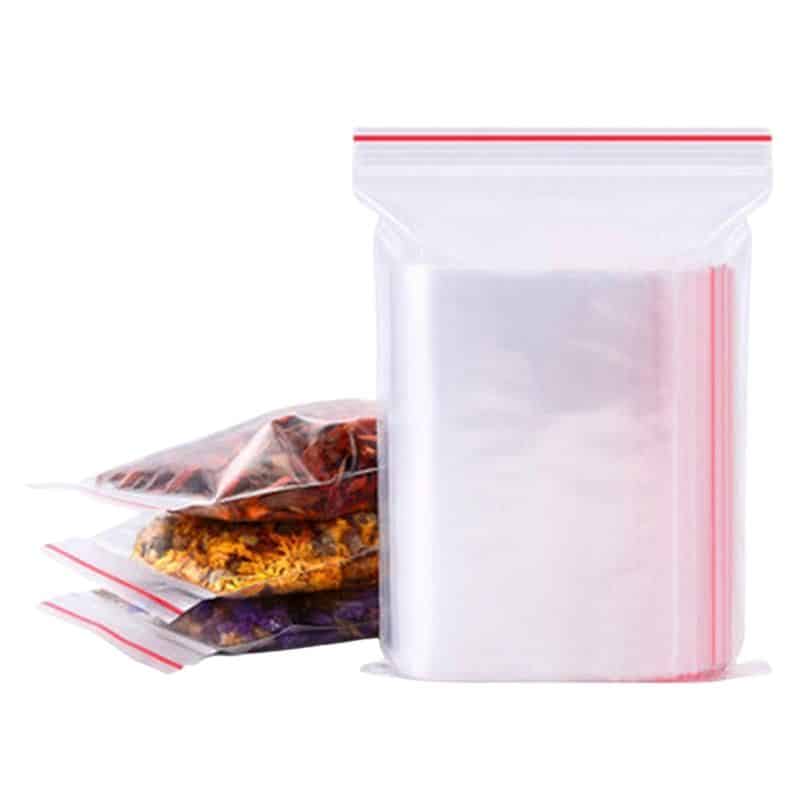 Ziplock® hermetic food bagsPrice range: 8,00€ through 9,00€
Containers larger than 100 ml must be placed in your checked baggage.
Keep these numbers in mind when shopping for toiletries. You can find carry-on versions for most products and brands. Beware of products in small containers that are slightly over the limit. We are always surprised to find 110ml containers of toiletries. They are close to the limit, but not compliant.
If you can't find your favorite brands in 100ml size, buy the larger size and put some in a refillable bottle for travel.
Conclusion
Carry-on baggage compliance can seem confusing at first. But airlines aren't as strict as you might imagine from looking at their websites. Carrying a travel backpack small enough to fit every airline and fare type is ideal but impractical.
Instead, choose a bag that fits most airlines, pack light and weigh your bag before leaving.
Finally, if you haven't already, we strongly invite you to take a look at our wide range of travel accessories to travel in complete safety 😉